'Here There Are Blueberries,' the Holocaust Museum Drama, Sets November Broadway Opening at the Barrymore
 By Elena Vasquez · August 27, 2026 · 3 min read · Edited by Dominic Ferreira
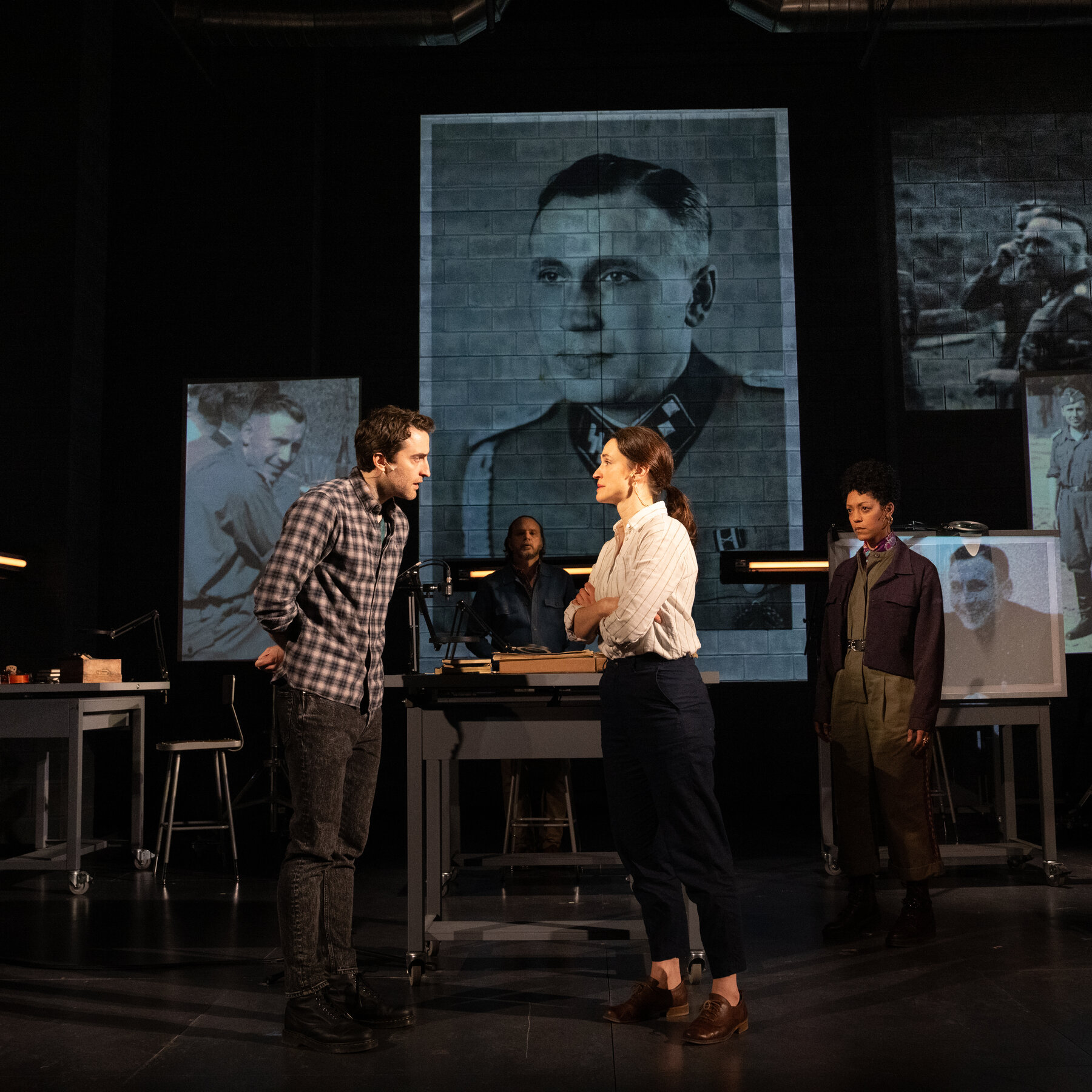
One of the most acclaimed American plays of the decade is coming to Broadway. "Here There Are Blueberries," Moisés Kaufman and Amanda Gronich's documentary-style drama about the Holocaust museum archivists who confronted a disturbing gift — a photo album showing Nazi officers at ease inside the Auschwitz complex — will open in November at the Ethel Barrymore Theatre, the production announced Thursday.
The story begins in 2007, when a retired United States Army intelligence officer contacted the U.S. Holocaust Memorial Museum in Washington with an offer. He had carried home a bound album of photographs from a bombed-out apartment in Frankfurt in 1946, kept it for six decades and now wanted the museum to have it. What archivists found inside stopped them cold: 116 images of SS officers and camp staff at Auschwitz singing around an accordion, lighting a Christmas tree and lounging at Solahütte, a lakeside retreat built for the camp's personnel.
In the sequence that gives the play its title, officers and young female assistants eat bowls of fresh blueberries, one woman turning her empty bowl upside down to show she has finished. The album's own handwritten caption reads, in German, "Hier gibt es Blaubeeren" — here there are blueberries. Not a single prisoner appears anywhere in its pages, even though the pictures were taken largely in 1944, the same year when more than 400,000 Hungarian Jews were deported to Auschwitz in a matter of weeks, most of them murdered within hours of arrival.
The album, researchers determined, had belonged to Karl Höcker, the adjutant to Auschwitz's final commandant, Richard Baer, and its frames include some of the only authenticated photographs of Josef Mengele on the camp grounds. For the museum's staff — dramatized in the play through a young archivist named Rebecca Erbelding and her colleagues — the gift posed an agonizing question: whether accepting and displaying photographs of murderers at play would illuminate the machinery of genocide or risk humanizing the men who ran it.
Here there are blueberries.
The day’s essential NY Webtimes reading, in your inbox before breakfast. Free, no spam.
Kaufman and Gronich, working with Kaufman's Tectonic Theater Project, built the play from the museum's records, interviews with curators and the album itself, whose images are projected onstage as the ensemble debates their meaning. The result plays less like a conventional drama than a moral inquest — an argument about evidence, memory and what audiences should be allowed to see.
Kaufman has made a career of turning real events into theater. His Tectonic Theater Project created "The Laramie Project," drawn from the aftermath of the murder of Matthew Shepard, and "Gross Indecency: The Three Trials of Oscar Wilde," and he directed both earlier stagings of "Blueberries." Gronich, a longtime Tectonic member, spent years developing the piece alongside him, with the cooperation of the museum.
The play had its world premiere at La Jolla Playhouse in California in 2022 and reached New York in 2024 for a sold-out Off-Broadway engagement at New York Theatre Workshop in the East Village, where critics praised its restraint and its unsettling central irony. It was later named a finalist for the 2025 Pulitzer Prize for Drama.
The Barrymore, a roughly 1,000-seat Shubert house on West 47th Street built in 1928 as a showcase for Ethel Barrymore, has hosted a string of serious dramas in recent seasons, including last year's starry revival of "Othello" with Denzel Washington. An exact opening date, preview schedule and casting for the Broadway production are expected in the coming weeks.
The transfer gives Broadway one of its most unlikely arrivals in years: a sober, ensemble-driven play about archival ethics landing in a commercial season typically dominated by musicals and star vehicles. Its backers are wagering that the material's urgency — at a moment when the survivor generation is nearly gone and surveys show public knowledge of the Holocaust thinning — will draw the same audiences that packed its downtown run.
The Höcker album, as the collection is now known, remains in the Holocaust Memorial Museum's permanent holdings, where researchers still study its faces frame by frame. This fall, that search moves to a Broadway stage, under lights, eight times a week.
Last updated September 1, 2026. Reporting by Elena Vasquez. Corrections: newsroom@nywebtimes.com.
Conversation (7)
Read this twice on my lunch break. The part about metro is exactly what people have been saying around here for months.
Not sure I buy every claim in here, but at least someone is asking the questions. The metro beat has been asleep everywhere else.
Printed this out for my dad. He doesn't do websites. He called me about metro twenty minutes later.
My neighbor clipped this out of the paper edition and brought it over. That tells you something about how metro lands with regular folks.
Longtime reader, first time commenting. This one got me. metro affects my street directly.
Finally a paper willing to put metro in plain language. Shared it with my brother, he never reads anything and he read this one.
Sent this to our group chat and it started a whole argument. In a good way. More on metro please.